
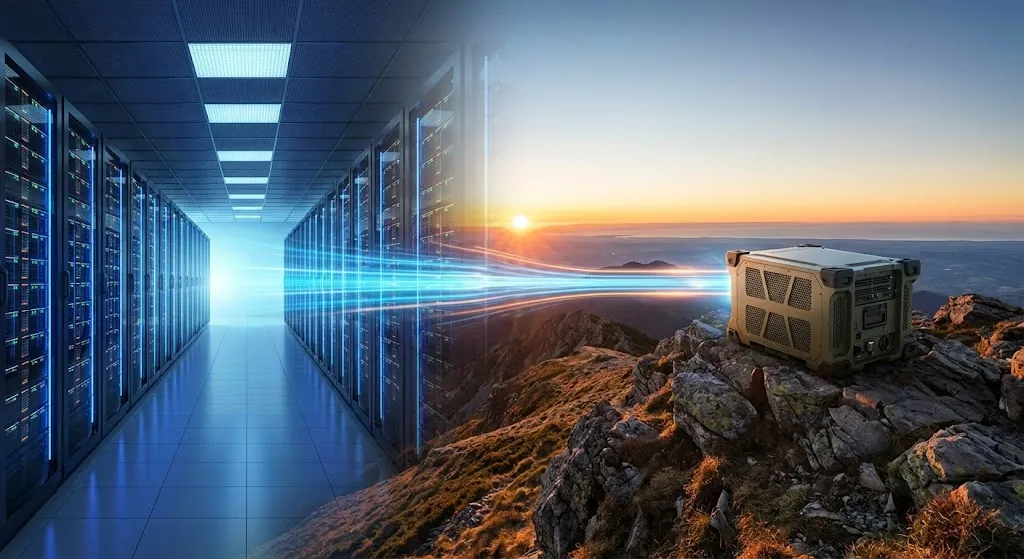
Stand up a working site in hours.
Disaster response and humanitarian operations
Norseman runs a secure cloud at your site. You run the mission.
A cased, operated site that gives an emergency operations center, shelter, field hospital or relief camp a working network and the applications to run the response within hours of arrival, and keeps working when every link is down.
Challenge
Connectivity kits arrive in minutes, but a working site takes applications, data and someone to run them, and the response has none of those on hand.
- Deployable network kits are mature: a pre provisioned cellular and Starlink kit is operational within about five minutes with no IT staff on site (RCN Technologies, June 2026). That solves transport. It does not give the EOC registration, mapping, team chat, document collaboration or a record of decisions that survives the link.
- Hurricanes take down cellular backhaul, grid power and the fixed circuits at the EOC and shelters at once, and a multi day outage outlasts tower batteries and fuel resupply (same source). Anything that depends on a cloud service stops with the link.
- Humanitarian operations face the same problem for months: field data collection and case management must work offline and synchronize when a link appears, and the agencies buying those systems now specify it.
- Connectivity costs tied to a declared disaster response may be eligible under FEMA Public Assistance, confirmed with the state coordinating officer (same source). The applications and operations that make it useful can be bought the same way, if someone offers them as one package.
Approach
Norseman ships the whole site in a case, with the applications already on it and a team already watching it.
- Deploy the Odin's Edge Mobile profile: compute, storage, switching, firewall and dual path connectivity (cellular plus Starlink) in a transit case, integrated and tested in Norseman's lab and staged with the response agency's configuration before the season or the deployment.
- Load the mission applications as hardened packages: registration and intake forms, mapping and situational awareness, team chat and voice, document collaboration, a local record store, and the connectors to the agency's systems of record.
- Run everything locally first. Applications work with no link at all; when a link appears, the site synchronizes, in both directions, on the schedule the agency sets.
- Open the case, plug in power, press one button. Responders connect over Wi Fi and private cellular; nobody on site configures anything.
- Operate it remotely: Norseman watches links, hosts, backups and application health around the clock for the life of the deployment, patches between operations, and hands over to the agency's team with the same console when asked.
Typical Outcomes
The EOC or camp is working within hours of the case arriving, and it keeps working when the link does not. Items marked target are design goals until a deployment or exercise reports.
- Hours from arrival to operating site, measured on every deployment (target: under two hours with no IT staff present).
- Days of fully disconnected operation with every application available and no data lost at reconnection (target; measured in exercises).
- One kit configuration for every position in the plan, so the EOC, the shelter and the forward post run the same way.
- A reimbursement and donor trail that holds: equipment, connectivity and operations documented per deployment.
- The same site runs the AI when the mission is ready: damage assessment from imagery, translation for displaced populations, triage support in a field hospital.
Procurement Paths
- State and local emergency management: GSA MAS through cooperative purchasing where the state allows it, or state contracts; buy before the season, and confirm FEMA Public Assistance eligibility with the state coordinating officer.
- Federal response and homeland security agencies: NASA SEWP VI, GSA MAS and CIO-CS, with a hardware line and an associated service line per kit.
- Humanitarian organizations: direct purchase or per kit subscription from Norseman, with financing, documented for donor reporting.
- A budgetary estimate on your vehicle comes with the first conversation.
Compare vehicles and ordering steps on How to buy.
Partner Technology Examples
- Connectivity: Starlink through resellers, Ericsson Cradlepoint, Peplink
- Rugged compute and enclosure: Dell Technologies, Hewlett Packard Enterprise, Advantech, Crystal Group
- Platform: SUSE Rancher and Harvester or Spectro Cloud Palette
- Mission applications: TAK Server, GeoServer and QGIS, KoBoToolbox, Mattermost, Nextcloud (all open source)
- Security and operations: Palo Alto Networks or Fortinet, Keycloak (open source), Grafana and Prometheus (open source)
Odin's Edge: the operated site
Norseman runs a secure cloud at your site. You run the mission.
Odin's Edge is Norseman's managed edge platform. It puts compute, storage and network at the site under one controlled architecture, on the hardware you already run, integrated and tested in our lab before it ships. Applications arrive hardened, with the configuration baselines and test reports your security team needs. Norseman operates it around the clock or hands it to your team with the same console. Buy it as one line on your vehicle or as a per site subscription.
The same site runs the AI when the mission is ready.
Explore Odin's Edge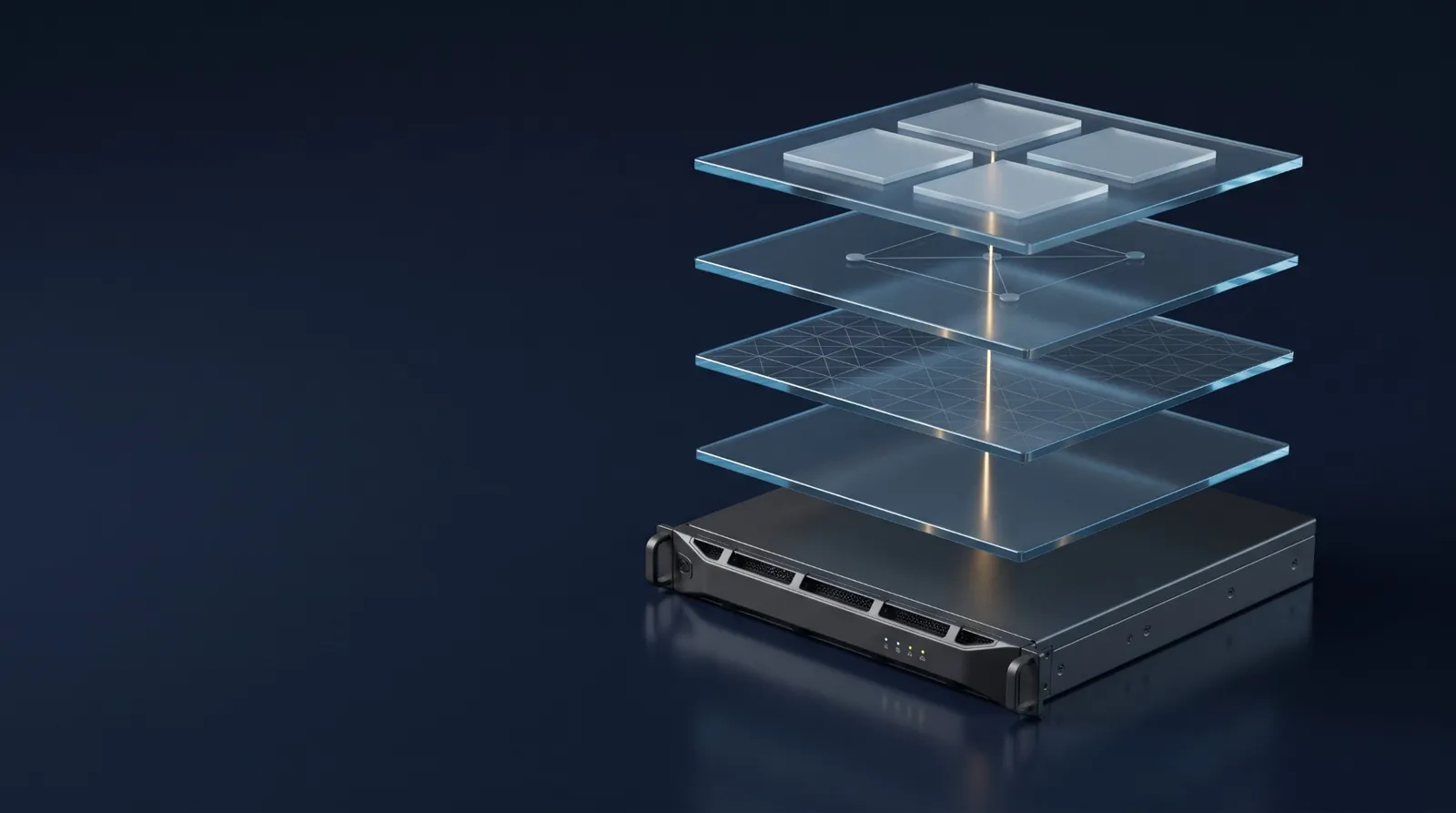
Sources: RCN Technologies, Hurricane Season 2026: Emergency Connectivity Before the Storm Hits, June 2026 (rcntechnologies.com).
This is a representative use case. To request a briefing or a quote, contact Norseman Defense Technologies at 410.579.8600 or sales@norseman.com.