
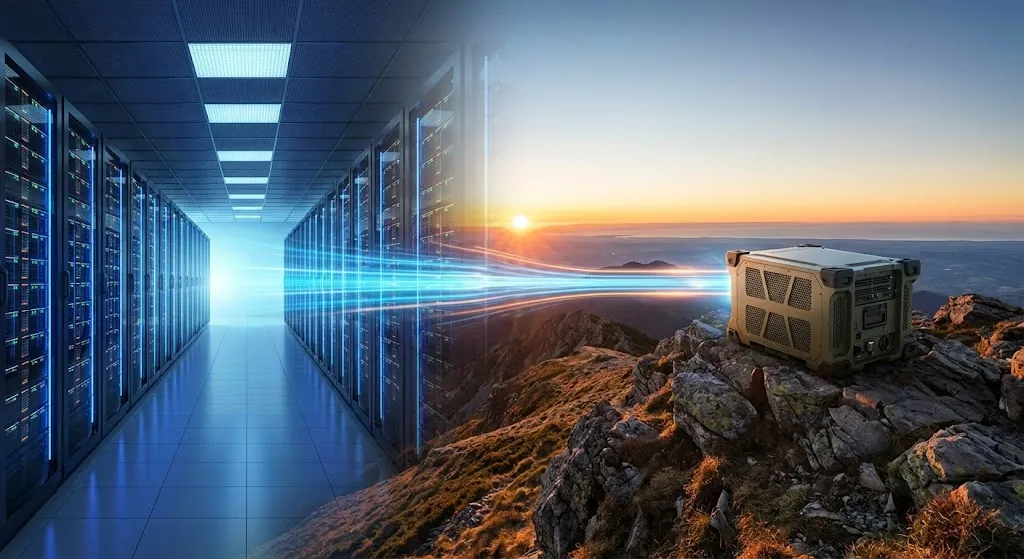
Fix the dead zones.
Private cellular on the site platform
Norseman runs a secure cloud at your site. You run the mission.
An operated site platform that hosts a private cellular core beside the applications the radios feed, so forklifts, scanners, cameras and push to talk devices stay connected across warehouses, yards, ports and installations where Wi Fi has failed.
Challenge
The site has spent years adding access points and still changes its work around the places the network does not reach.
- Port Nelson scans every pallet it moves, and high density block stacking plus the port's layout blocked Wi Fi in many areas; interference came from Bluetooth, electric forklifts and even the blue safety light on a reversing forklift, and a new warehouse with new equipment had the same problem. Operators changed their processes to stay connected (Network World, July 2026).
- The port's private 5G network covers about 30,000 square meters across three warehouses from a high availability core on site, with dual SIM routers on the forklifts that switch between private and public 5G at the coverage edge (same source).
- The network was the prerequisite for the rest of the program: push to talk over 5G, geofenced alerts around cranes, predictive maintenance, computer vision for people and machinery proximity, and drones for inventory and inspection (same source).
- The hard part for most sites is not the radios. It is the core, the applications it feeds, the integration with devices and identity, and the people to run all of it. A port with a transformation office can staff that. A regional distribution center, a base or a plant usually cannot.
Approach
Norseman puts the core, the applications and the operator on the site platform, and partners with the radio vendor for the air.
- Deploy the Odin's Edge Site profile in the site's communications room, integrated and tested in Norseman's lab, with the private cellular core, SIM management and device management hosted on it.
- Design the radio layer with the cellular partner: CBRS or licensed spectrum, small cells placed for the stacking pattern and yard, dual SIM routers on vehicles so devices roam between private and public networks.
- Host the applications the radios feed on the same platform: scanning and inventory, push to talk, telematics, camera streams, so traffic stays on site and keeps working when the WAN is down.
- Integrate identity and security once: devices and SIMs tied to the site's identity provider, traffic segmented by function, logs forwarded to the SOC.
- Operate it: 24/7 monitoring of core, radios, hosts and applications, patching under SLA, coverage reports by zone. Or hand over to the site's team with the same console.
Typical Outcomes
The work stops bending around the network, and the digital program the coverage was blocking can start. Items marked target are design goals until a pilot reports.
- Scanner and device disconnects per shift fall to near zero across the covered area (target; measured before and after from device management data).
- Coverage becomes a map the operations director owns, reported by zone each month.
- Push to talk, telematics and camera streams run on one network instead of radios, Wi Fi and cellular hotspots.
- No IT staff at the site; the operations team runs the floor, Norseman and the cellular partner run the network and the platform.
- The same site runs the AI when the mission is ready: proximity detection between people and machinery, automated cycle counts, predictive maintenance on vehicles and cranes.
Procurement Paths
- Warehouses, ports and plants: per site subscription or direct purchase from Norseman, with financing; the business case is built against the Wi Fi spend it replaces and the program it unblocks.
- Military installations and depots: ITES-4H for Army, NASA SEWP VI and GSA MAS elsewhere, with spectrum coordination handled with the installation.
- Public ports and transit authorities: GSA MAS through cooperative purchasing where the state allows it, or state contracts.
- A budgetary estimate on your vehicle comes with the first conversation.
Compare vehicles and ordering steps on How to buy.
Partner Technology Examples
- Private cellular: Celona, Ericsson Enterprise Wireless, HPE Athonet, Open5GS (open source)
- Vehicle and device connectivity: Ericsson Cradlepoint, Zebra, Peplink
- Platform and hardware: SUSE Rancher and Harvester or Spectro Cloud Palette; Dell Technologies, Hewlett Packard Enterprise, Supermicro
- Applications: push to talk platforms, warehouse and yard systems, Milestone XProtect or Frigate (open source) for cameras
- Security and operations: Palo Alto Networks or Fortinet, Keycloak (open source), Grafana and Prometheus (open source), ServiceNow
Odin's Edge: the operated site
Norseman runs a secure cloud at your site. You run the mission.
Odin's Edge is Norseman's managed edge platform. It puts compute, storage and network at the site under one controlled architecture, on the hardware you already run, integrated and tested in our lab before it ships. Applications arrive hardened, with the configuration baselines and test reports your security team needs. Norseman operates it around the clock or hands it to your team with the same console. Buy it as one line on your vehicle or as a per site subscription.
The same site runs the AI when the mission is ready.
Explore Odin's Edge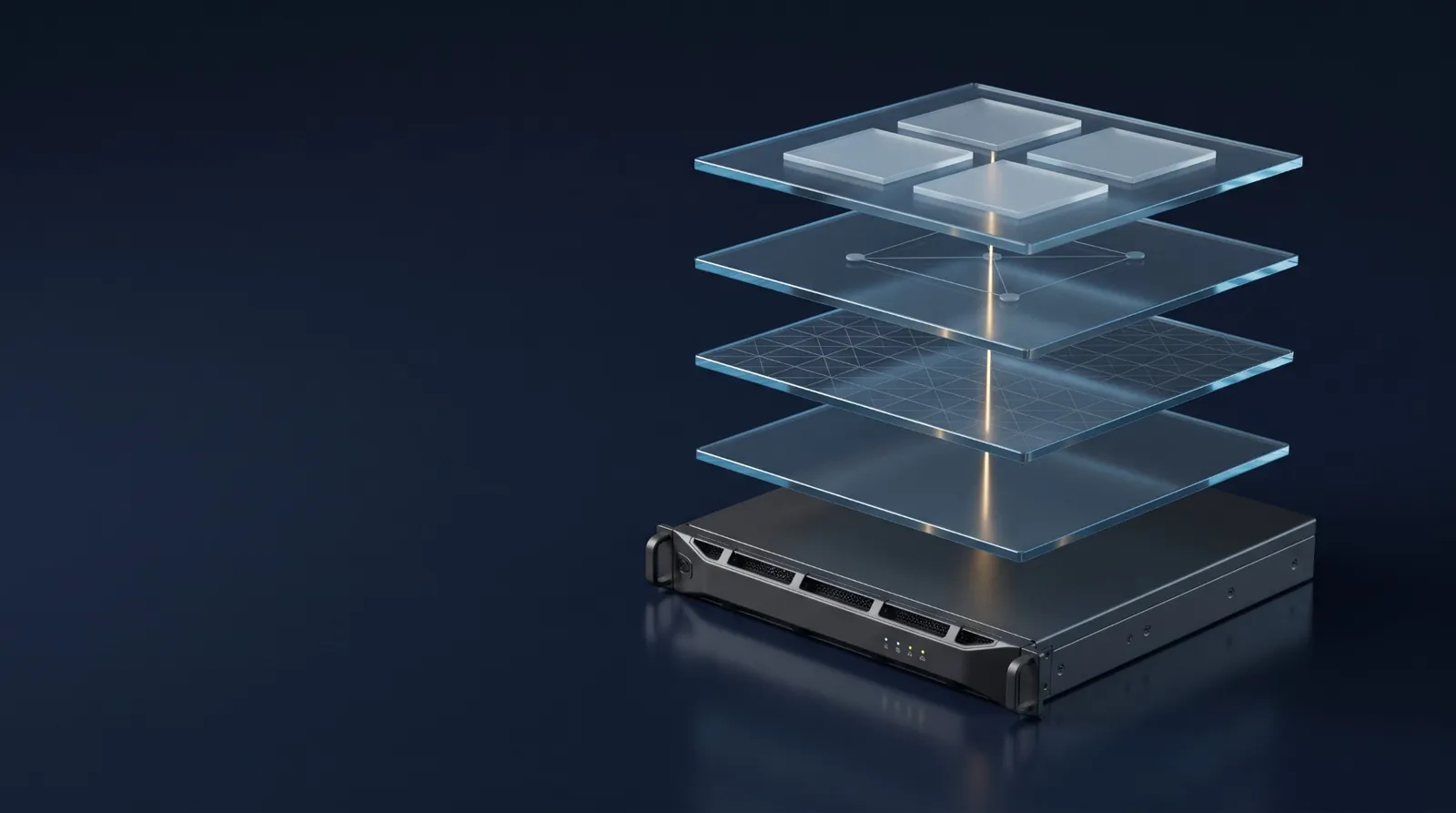
Sources: Network World, How Port Nelson overhauled its operations with private 5G, July 2026 (networkworld.com).
This is a representative use case. To request a briefing or a quote, contact Norseman Defense Technologies at 410.579.8600 or sales@norseman.com.